Persistent pain is rarely explained by tissue damage alone.
If it were, most people would recover once tissues had time to heal. Yet many don’t. Pain lingers, movement feels threatening, and confidence in the body steadily erodes.
This is because persistent pain is as much about protection as it is about pathology.
Over time, the brain learns to protect certain movements, positions, or body regions. This protective response is well-intentioned, but when it becomes overactive, it can keep pain going long after tissues are safe.
Pain as a Learned Protective Response
When pain persists, the nervous system often becomes sensitised. The brain begins to associate particular movements or postures with danger, even in the absence of ongoing injury.
Common beliefs start to form:
“My spine is fragile”
“Bending is dangerous”
“If I move the wrong way, I’ll make things worse”
These beliefs matter. They shape behaviour.
People begin to guard, brace, avoid movement, or hold their breath without realising it. Muscles stay tense, movement becomes rigid, and everyday tasks feel risky. Ironically, these protective strategies can increase pain, stiffness, and fatigue over time.
This is the pain–fear cycle.
Changing the Meaning of Pain
At Inner Focus, we work to interrupt this cycle by addressing pain on two levels: meaning and movement.
The first step is helping people understand what their pain represents now, not what it once represented during an acute injury.
When pain is reframed as a protective signal rather than evidence of damage, the nervous system has permission to soften. Fear reduces. Confidence begins to return.
This process is central to Cognitive Functional Therapy (CFT), which helps identify unhelpful beliefs, threat-based interpretations, and habitual protective behaviours that keep pain alive.
But understanding alone isn’t enough.
Movement as the Evidence
Once the meaning of pain begins to shift, movement becomes the tool for reinforcing that new understanding.
This is not about stretching for flexibility or “loosening tight muscles.” It is about systematic re-exposure to movement in a way that signals safety, builds trust, and restores capacity.
The process is gradual and intentional:
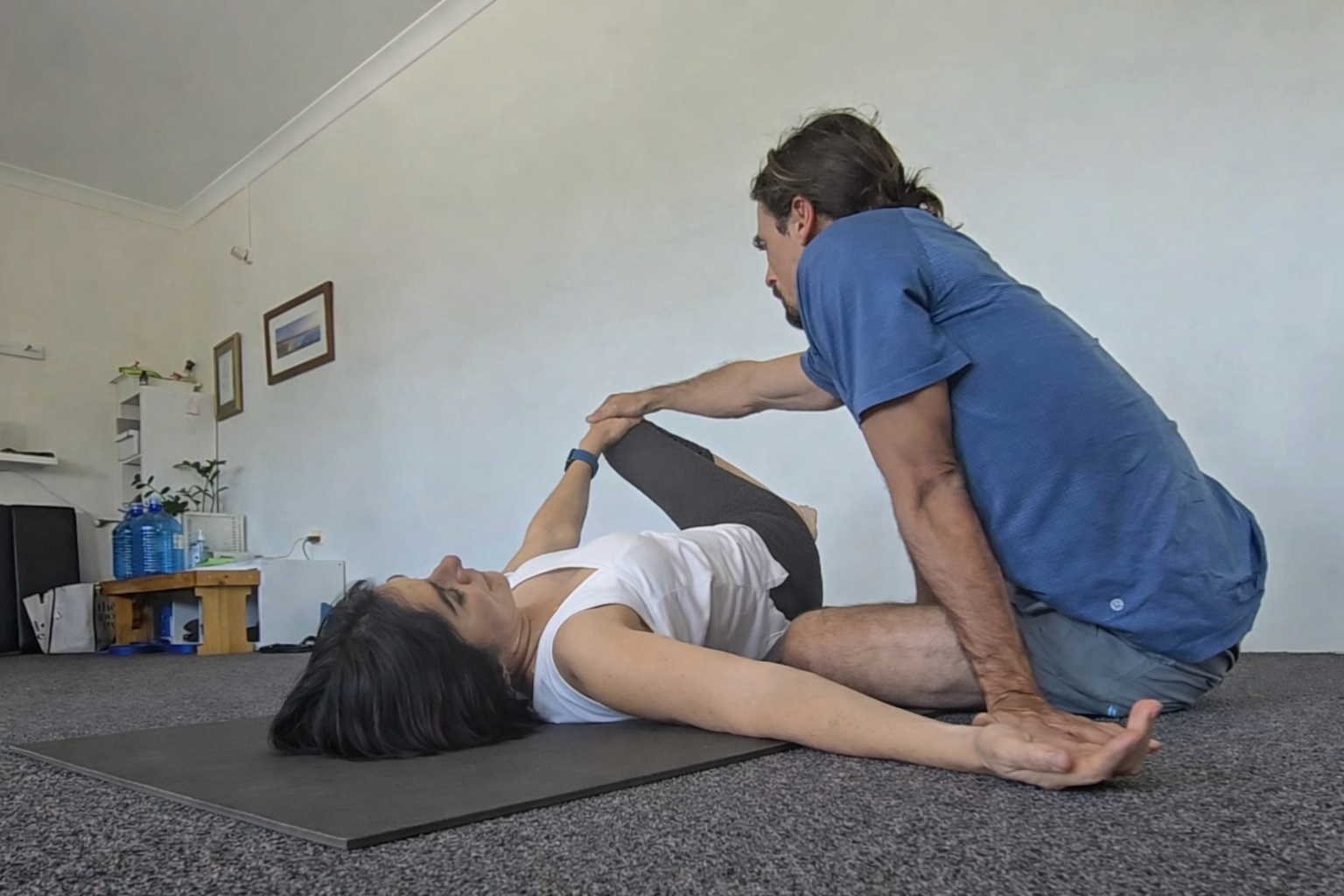
Slow, floor-based mobility to reduce threat and calm the nervous system
Progression into weight-bearing positions to rebuild confidence and strength
Return to demanding, controlled movements that demonstrate the body is robust, not broken
Each stage provides evidence. Not reassurance, but lived experience.
The body moves. Nothing breaks. Pain loses its authority.
From Protection to Confidence
The goal is not to eliminate all discomfort, but to develop a nervous system that no longer feels the need to over-protect.
When movement is reintroduced in the right way, fear gives way to curiosity. Guarding gives way to flow. Avoidance gives way to capability.
Pain no longer dominates decision-making.
Movement becomes normal again, not something to manage or fear.
A Different Way Forward
With the right combination of understanding, graded exposure, and meaningful movement, the system can learn a new story.
One where the body is capable.
One where movement is safe.
One where confidence replaces caution.